Home begins within.Psychedelic-Assisted Therapy in the Comfort of Your Home
Rooted in years of listening to patients, our team is led by a neurologist and trauma-specialized psychologists, providing care to families across the Greater Toronto Area.


When nothing else has worked, healing can still be possible.
Did you know? Psychedelic-assisted therapy can relieve symptoms of treatment-resistant depression within 24 hours (Murrough, et al., 2013).
Homeward Therapy’s at-home psychedelic-assisted therapy (PAT) program provides evidence-based mental health treatment in the comfort of your own home. It combines psychedelic-adjacent medication prescribed and monitored by a licensed physician, with structured psychotherapy from trained psychologists. The program is designed for adults and adolescents (13+) who have not responded to conventional treatments for depression, anxiety, PTSD, or related conditions.

“We’re all just walking each other home”— Ram Dass

The Journey WithinOur Clinical Approach
At-home care: Regulatory-approved psychedelic-assisted therapy delivered where healing happens best.
Team-based expertise: Neurologist, psychologists, and specialized nurses guiding every step.
Optimized for outcomes: Familiar environments and personalized support contribute to therapeutic outcomes.
Evidence-driven: Research, attunement, and clinical rigour inform every facet of treatment.
Compassionate care: Tailoring treatment to your individual needs.

Meet the Team
-
![A woman with shoulder-length black hair, wearing a brown button-up top and a gold necklace, sitting at a desk in an office with white shelves and a lamp in the background.]()
Dr. Bramilee Dhayanandhan, Ph.D., C.Psych.
Co-Director, Registered Psychologist
-
![A woman with long dark hair, glasses, and a black turtleneck, smiling in an office setting.]()
Dr. Angela Kertes, Ph.D., C.Psych.
Co-Director, Registered Psychologist
-
![A man with short dark hair and a beard, wearing a navy blue suit and white shirt, smiling at the camera in an office setting.]()
Dr. Evan Lewis, MD, FRCPC, CMLE, C-CAT(P)
Co-Director, Neurologist
-
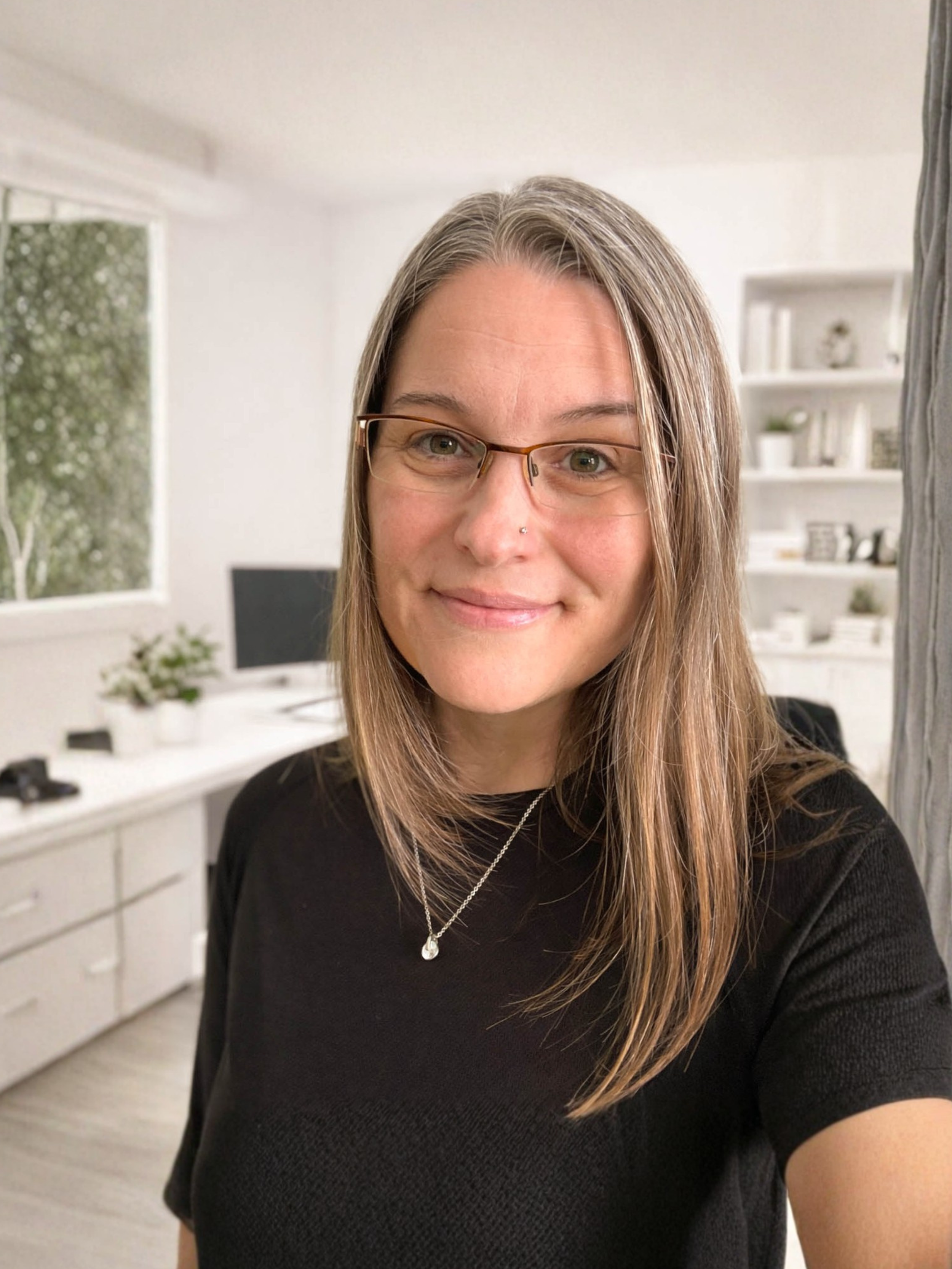
![A woman with long light brown hair, glasses, and a nose piercing smiling in a well-lit room with white walls and shelves.]()
Katherine Hambleton, R.N.
Registered Nurse
-
![Close-up of a smiling woman with curly hair wearing a white top in a hallway.]()
Ann-Marie Spindler, R.N., M.N.
Registered Nurse, Master of Nursing
-
![A young woman with brown hair and green eyes, wearing a light blue patterned button-up shirt, standing in a white-walled room with shelves and plants in the background.]()
Angelo Manalac, B.H.Sc.
Program Manager




Our Process
Our Process

Screen
Your detailed health information is collected.

You will undergo a medical and psychological assessment to determine safe candidacy.
Intake

Clinical team-based review produces an individualized treatment plan based on your needs.
Review

Low-dose psychedelics are administered at home under medical supervision, and paired with therapy sessions.
Treatment

Integration
Future and ongoing care is developed collaboratively between you and the team.

In the space you call home.


Homeward Therapy’s team of experts is with you every step of the way.
Our neurologist oversees treatment.
Our psychologists provide therapy.
Our nurses support you in your home.
Our network of practitioners ensures comprehensive care.
Our Story
Care has to move beyond clinic walls and into the safety of patients’ own homes.
Our work began with a simple but important realization: even when psychedelic-assisted therapy (PAT) is effective in clinical settings, the model itself can sometimes fall short for patients. Long travel, unfamiliar environments, and an abrupt return home can heighten anxiety and disrupt the healing process.
Having witnessed PAT’s transformative potential firsthand, our team, a neurologist, two psychologists, and experienced nurses, recognized that setting matters as much as the medicine. That understanding inspired Homeward Therapy’s thoughtful, at-home approach, designed to support healing where patients feel most safe and supported.






The Role of Psychedelics in
Mental Health Care
Reduces symptoms within 24 hours, even for people who have not responded to other treatments.
Rapid Relief

Higher response and remission rates compared to placebo, with benefits that can last for weeks after treatment.
Proven Results
Restores function, hope, and connection.
Transformative Potential
Low rates of reported adverse events with minimal side effects compared to other medications.
High Tolerability

How Does Psychedelic-Assisted Therapy Differ from Other Treatments?
-
By promoting rapid neuroplasticity, psychedelics create a window in which therapy is more effective, helping patients process trauma, explore difficult emotions, and foster personal growth.
-
This medication works on the brain’s glutamate system, often improving depression, anxiety, PTSD, and trauma-related distress within hours or days, much faster than traditional antidepressants.
-
Structured psychotherapy during this window of neuroplasticity reinforces new insights, coping strategies, and behavioural changes for lasting change.
-
Medication doses are tailored to each patient’s needs, optimizing safety, comfort, and therapeutic effectiveness.
FAQs

How does the program work?
Patients begin with a comprehensive medical and psychological assessment to ensure safety and eligibility. The prescribed medication is then administered at home under medical supervision and paired with therapy sessions before and after treatment. The clinical team continuously monitors safety, response, and progress, adjusting care as needed.
How many sessions will I need?
Most patients complete four psychedelic-assisted therapy sessions over two weeks, with therapy before and after each session. Plans are individualized based on goals, response, and medical history.
Who can benefit from this program?
Adults and adolescents experiencing treatment-resistant depression, anxiety, PTSD, trauma-related distress, chronic stress, or feeling emotionally “stuck” despite prior therapy or medication may be eligible. A clinical assessment by both a physician and psychologist determines appropriateness. We treat ages 13 to 65.
Is this treatment safe?
Yes. Medicine doses are low and carefully monitored. Patients are screened for eligibility. Side effects, such as dizziness, nausea, dissociation, or mild blood pressure changes, are typically short-lived. Continuous monitoring ensures safety throughout the session.
What are the fees?
Program fees vary based on individual treatment needs and include both OHIP-covered and non-OHIP-covered components. Patients are responsible for paying for uninsured services directly, with many extended health or workplace benefit plans providing coverage for some non-OHIP services. Out-of-pocket costs may qualify as medical expenses for tax claims.
What can I expect?
Many patients report improved mood, reduced anxiety, better sleep, and greater emotional clarity. Outcomes vary, and lasting benefits depend on ongoing integration.

A Story that Drives Us
One story that inspires our work is that of a patient whose treatment-resistant depression, PTSD, and daily functional seizures were so severe that she could no longer work or care for her family. When she came to us, she had tried every available treatment and was still living in despair.
After beginning psychedelic-assisted therapy with us, her seizures decreased from 7–21 per week to almost none. She reduced her dependence on benzodiazepines, her depression scores improved by 50%, and her disability scores by 85%. She described this treatment as the first intervention that allowed her to process trauma without triggering seizures. Her case was published as the first documented report of psychedelic-assisted therapy improving functional seizures (Argento et al., 2023).